
Lipedema
What is Lipedema?
Lipedema is a long‑term condition where fat and fluid build up in a very specific pattern, usually in the legs and sometimes the arms. It can cause pain, tenderness, easy bruising, and a feeling of heaviness that makes daily activities harder. It is not your fault and it is not just “weight gain” or a cosmetic issue.
Symptoms include:
- Pain with pressure (hurts to have a massage, hurts when a dog steps on your legs, etc)
- Nodules/Bumps that are palpable and sometimes visible
- Easy bruising
- Often feel that their legs and/or arms are a different size than the rest of their body
- No matter how much exercise or healthy eating it doesn’t seem to change the shape of the limbs
- Both legs and/or both arms are affected (not just one side)
Who Gets Lipedema and Why?
Lipedema occurs almost exclusively in females. There is likely a genetic component to it as well. Many patients will say their mom, grandma, or aunt had legs that looked like theirs. The cause of lipedema is still being researched but experts believe there is a hormonal component.
Often patients will say their legs started changing around puberty, during a pregnancy, or in menopause. Patients often comment that they have always had larger legs than other girls no matter how much they worked out or dieted.
Is Lipedema the Same as Lymphedema?
No. Lipedema is a fat disorder and lymphedema is a disease of the lymphatic system. Often patients with lipedema will start to see swelling. We call this “Lipo-Lymphedema”. This is where the fatty deposits under the skin, overtime, start to cause the lymphatic system to not work as efficiently.
What Can I Do for My Lipedema?
Many experts now understand lipedema as a disorder that affects both the fat tissue and the lymphatic (fluid‑drainage) system. Treatment focuses on improving how fluid moves, protecting your tissues, and reducing pain and disability over time.
Working with our certified lymphedema therapists (CLT) can help manage your symptoms. Your therapist will teach you how to perform manual lymph drainage (MLD) as they perform the technique on you. This can help flush excess fluid and stimulate your parasympathetic nervous system to help with pain. Lightweight compression usually in the form of leggings can help with symptoms. Bioflect and CzSalus are two brands specifically designed for patients with lipedema.
If you are interested in a lipedema consultation, we require a referral from a licensed healthcare provider, such as a primary care clinician, OB-GYN, or other specialist familiar with your overall health history.
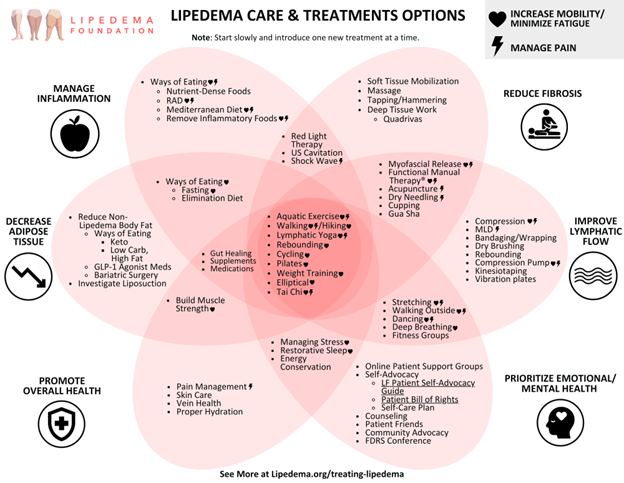
Why Start With Conservative Measures?
Our clinic follows current medical guidelines and insurance requirements that say conservative treatment must come first before surgery is considered.
Conservative (non‑surgical) treatment helps to:
- Reduce pain, tenderness, and heaviness.
- Control swelling and protect the skin.
- Improve walking, standing, and daily function.
- Support the lymphatic system and overall health.
Even when surgery is an option later, many surgeons and guidelines recommend that patients first establish healthy routines with conservative treatments, because these habits are still needed after surgery and can improve recovery. Typical conservative treatment lasts at least 3 months, and sometimes up to 6 months, depending on your situation and your insurance plan.
If you are interested in learning more about our treatment options, visit our lymphatic physical therapy page.
When is Surgery Considered?
Lipedema reduction surgery (for example, lymph‑sparing liposuction) can be helpful for some people, but it is not the first step.
Surgery is usually considered when:
- You have a clear diagnosis of lipedema.
- You have completed a reasonable trial of conservative treatment (including MLD, compression, movement, and self‑care) and still have significant pain or functional limits.
- You understand the potential benefits, risks, and need for ongoing conservative care even after surgery.
Most insurance companies also require a documented period of conservative treatment—usually 3–6 months—before they will review requests for surgery. Our clinic follows these medical and insurance standards to give you the best chance for coverage and good outcomes.
We do not have lipedema surgeons on staff and we do not perform lipedema reduction surgery at our practice. If, after an adequate trial of conservative care, you wish to explore surgical options, we encourage you to use reputable, up-to-date resources like lipedema.org to identify surgeons with experience in lipedema surgery. We are happy to provide copies of relevant clinic notes, measurements, and imaging and communicate with your chosen surgical team when appropriate.