
News
Compression Stockings 101: Why, When, and How to Wear Them
Oct 21, 2026 · Medically Reviewed by Jeffery P. Schoonover, MD and Katherine L. Morrow MD
Compression stockings are one of the simplest tools in vein and lymphatic care, and one of the most misunderstood. Some patients picture thick, beige hospital stockings. Others aren’t sure why they need them, how tight they should be, or how to get them on without a wrestling match.
This guide covers what compression does, who it helps, and how to choose and wear the right pair. It also introduces our new online compression store, where you can order Sigvaris garments any time.
How compression works
The veins in your legs work against gravity to move blood back to your heart. When the valves inside those veins weaken, blood can pool in the lower legs. That pooling causes the heaviness, aching, swelling, and visible veins many of our patients describe.
Compression stockings apply gentle, graduated pressure. They are tightest at the ankle and gradually looser up the leg. That pressure helps your veins move blood upward and helps your lymphatic system move fluid out of the tissues, so your legs feel lighter and less swollen by the end of the day.
Who benefits from compression
Compression can help if you have:
- Varicose veins or spider veins
- Chronic venous insufficiency, including leg heaviness, aching, or swelling by the end of the day
- Lymphedema or lipedema, including mixed presentations
- A recent vein procedure, such as radiofrequency ablation or sclerotherapy (see our Procedure Instructions)
Compression can also help people without a diagnosed condition, including:
- People who stand or sit for long hours at work
- Travelers on long flights or car trips
- Pregnant women experiencing leg swelling
Compression is also often part of the first phase of vein care. Many patients start with conservative measures like compression before moving on to other treatments. Learn more on our Conservative Measures page.
Check with your provider first if you have peripheral artery disease, diabetes with reduced feeling in your feet, fragile skin, or an open wound. Compression isn’t right for everyone, and the wrong pressure can do more harm than good.
Choosing a compression level
Compression is measured in millimeters of mercury (mmHg). The higher the number, the firmer the squeeze.
| Level | Typical Use |
| 8–15 mmHg (light) | Tired, achy legs; everyday comfort; travel |
| 15–20 mmHg (mild) | Mild swelling; long days on your feet; travel; pregnancy |
| 20–30 mmHg (moderate) | Varicose veins, moderate swelling, and recovery after vein procedures |
| 30–40 mmHg (firm) | More significant swelling, lymphedema, and advanced venous disease, usually under a provider’s direction |
If your provider has recommended a specific level, order that one. If you’re not sure which level is right for you, call us at (317) 348-3020 before you order, and our team will help you choose.

Getting the right fit
A compression garment only works if it fits. Stockings that are too loose won’t provide enough pressure, and stockings that are too tight can dig in, roll down, or cut off circulation. Sizing is based on measurements of your ankle, calf, and sometimes thigh, so measure before you order. Measuring first thing in the morning, before swelling builds, gives the most accurate fit. Not sure of your measurements? Our team measures patients in the office for a correct fit. Just ask at your next visit, or call us at (317) 348-3020.
Putting them on. The easiest time to put on compression stockings is in the morning, right after you get out of bed. A few tips:
- Turn the stocking inside out down to the heel.
- Slip your foot in and position the heel.
- Gradually roll the stocking up your leg, smoothing as you go. Don’t pull it up from the top.
- Check that there are no wrinkles or bunching, especially at the ankle and behind the knee.
Rubber gloves can help you grip the fabric, and a donning aid makes the job easier if you have trouble bending or limited hand strength. Watch our compression tutorial to see a quick and easy way to put them on.
Caring for your stockings
- Wash them often. Washing after each wear helps the fabric recover its shape. Follow the care label, and avoid fabric softener and high dryer heat, which break down the elastic fibers. Air drying is recommended.
- Rotate pairs. Having two pairs lets one dry while you wear the other.
- Replace them regularly. Compression fabric loses its strength over time. Most garments need replacing about every six months, or sooner if they feel loose or are easy to pull on.
- Check your skin. If you notice redness, numbness, tingling, or skin breakdown, take the stockings off and call us.
Wearing permanent ankle jewelry?
Welded anklets and permanent chains have become popular, but they can be a problem under compression. Compression garments fit snugly over the ankle, which is where the pressure is strongest. A chain underneath can create pressure points, irritate the skin, or keep the stocking from fitting properly. Please check with our medical team before ordering compression if you wear permanent ankle jewelry.
Shop our new online compression store
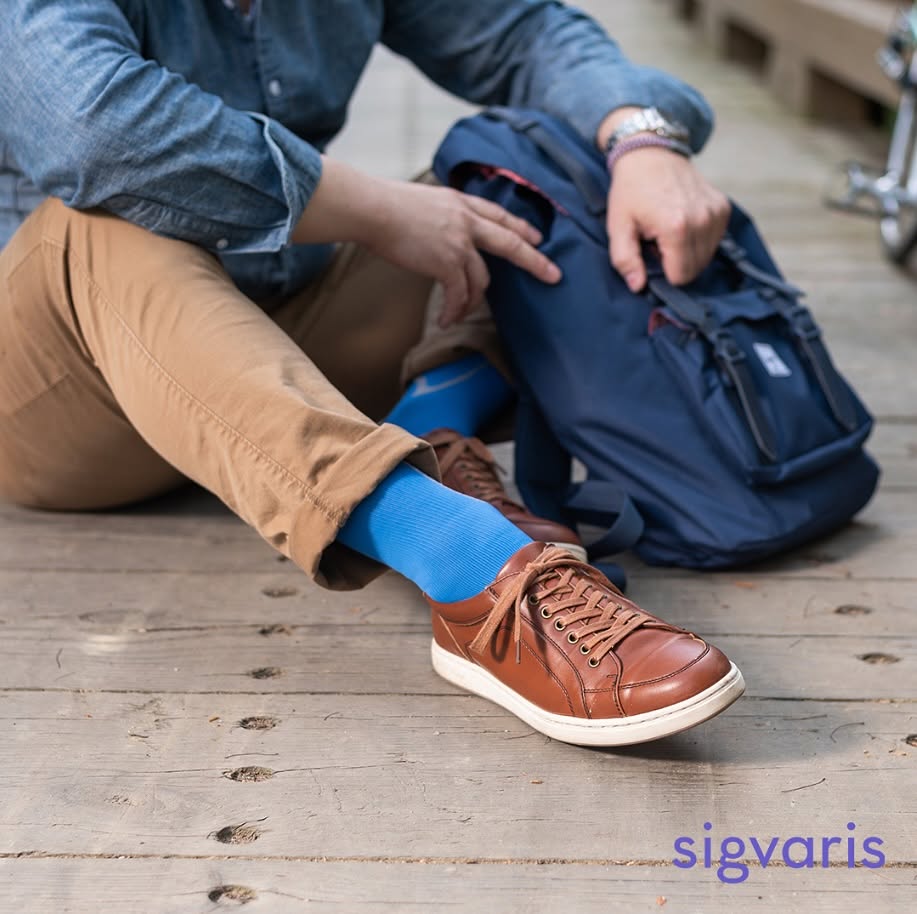
You can now order compression socks and stockings any time through our online store. We carry a wide variety of Sigvaris compression garments and accessories, with options in color, length, and compression level. Compression has come a long way, and today’s styles are comfortable enough for all-day wear and stylish enough for work or a night out. Visit Our Sigvaris Compression Store
Not sure of your size? We’ll measure you in the office so your garments fit correctly from day one. Have questions about compression or need help choosing the right pair? Call us at (317) 348-3020. If you’re dealing with leg pain, swelling, or visible veins, compression may be only the first step. Schedule a consultation to find out what’s causing your symptoms and which treatment options are right for you.